What is SEO ڇا آهي؟
This is the strategic process of improving a website’s visibility on AI platforms and Google in organic search results to attract targeted traffic and increase conversions. The process starts with optimizing your site for buyer-intent keywords and then tailoring the content for zero-click search results so that LLM platforms can present your site as a reference it in their citation, share of voice, EEAT building.
This also includes building local citations and authority beyond your own website in a comprehensive way to satisfy both Google and AI platforms. It is built on five pillars: Technical SEO, On-Page SEO, Off-Page SEO, Content Strategy, and User Experience & CRO, working together to improve ranking, authority and performance on SERP.
Table of contents
- How to define SEO and its types.
- Google SEO versus AI SEO
- SEO FAQs
What is SEO Definition
Search engine optimization means helping your website show up on Google when people search for something. It’s like making your site easy to find and understand. Today, optimization of search engines also helps AI systems notice your content, so both people and smart machines can see, read, and share your website easily.
Google KPIs (Key Performance Indicators) show how well your website is doing on search engines. These include rankings, organic traffic, click-through rate (CTR), bounce rate, and conversions. They tell us if people are finding and using your site.
AI KPIs show how visible your content is to AI systems. These include AI mentions, content citations, answer inclusion, semantic relevance, and engagement in AI-generated results. They help us know if AI tools understand and recommend your content.
Together, these KPIs help us improve engines like google optimization so both people and AI can easily find, trust, and use your website.
Search engines Market Share
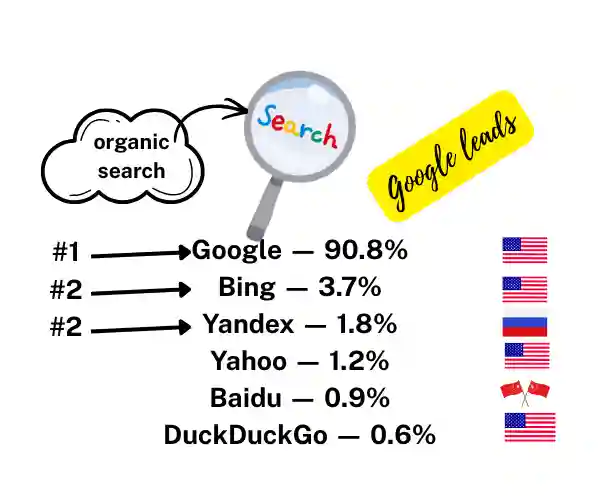
According to the latest global data, Google dominates the search engine market with about 90% share, making it by far the most used search engine worldwide. Other search engines include Bing (around 3.7%), Yandex (about 1.8%), Yahoo! (around 1.2%), Baidu (about 0.9%) and DuckDuckGo (about 0.6%). This highlights Google’s overwhelming position in global web search
- Google — United States
- Bing — United States
- Yandex — Russia
- Yahoo — United States
- Baidu — China
- DuckDuckGo — United States
What are main types of SEO
- On-Page SEO
- Off-Page SEO
- Technical SEO
- Local SEO
- E-commerce SEO
- AI SEO (AEO/GEO)
In near future, the businessess worldwide will no longer survive without optimizing their site to google algorithim because this is necessary for their long term sustainability. According to stats, every body on the earth searches 3 times per day. 8.5 Billions searches are being made in a month and these searches are increasing day by day.
The types many be different like text , audio, or video and son on. The search engine experts understand google guidelines and AI working style, hence they can make your site visible on google and in AI citations. Since our focus is on google engine so its best know how this works.
Google SEO vs AI SEO
Traditional general google used to rank the sites with high search volume of Keywords, but today AI has changed this to clickless searches, as you know, Whatever we don’t know, we now ask ChatGpt to answer it in comprehensive format. We hardly use google search to know a new querry. AI KPI are different, hence websites have to follow them to rank in clickless searches or say Visibiity which includes No of mentions, share of voice, citations, prompts, EEAT so on so forth.
1. Primary Goal of Search Engine Optimization: Increase AI Visibility & Google Rankings
The main goal is to improve a wepbsite’s visibility in organic search results and attract targeted traffic that converts into leads or sales. An SEO specialist w orks to rank websites on major search engines like Google, Bing, Yahoo, Yandex, and Baidu. Higher rankings increase brand authority, trust, and long-term sustainable traffic without paid advertising.
2. Why We Focus on Google search optimization/
Google holds the largest global market share, which is why most search performance strategies are primarily optimized for Google’s algorithms, ranking factors, and updates. Studying Google helps us understand search intent, technical standards, content quality requirements, and user experience expectations. However, a smart optimization strategy does not ignore other search engines. Optimization should also consider Bing and others to maximize total search visibility and diversify traffic sources. Thus we can increase share of voice in the market.
3. Local SEO: A Strategic Opportunity
Local search engine optimization focuses on ranking in location-based searches such as “SEO tutor near me” or “SEO training in Farsi Bagh.” The goal is to dominate Google Business Profiles, local listings, and map results.
Local-SEO often has lower competition compared to national or global keywords, which creates opportunity. Many businesses neglect proper local optimization, leaving gaps in structured data, reviews, citations, and localized content.
For an SEO specialist, targeting local map optimization, and search engine optimization can generate faster rankings, higher conversion rates, and strong authority within a specific geographic area, google business profile optimization and so on so forth.
Why optimization is more important than ever for websites today?
As of early 2026, there are approximately 1.34 billion websites worldwide, reflecting immense growth from just millions two decades ago. Only about 15% (roughly 200 million) of these sites are actively maintained, while the rest remain inactive. The most popular platform for building websites is WordPress, which powers around 43% of all websites globally, far more than any other content management system.
Shopify, Wix, Squarespace, and Joomla follow but with much smaller shares. This highlights both the explosive expansion of online presence and the dominance of established website platforms that make creation accessible for businesses and individuals alike
Here is the **fully center-aligned version (title + chart centered on entire page)** with fixed 600×500 size and your color palette: “`htmlWebsite Platform Market Share (%)
What is SEO pillar?
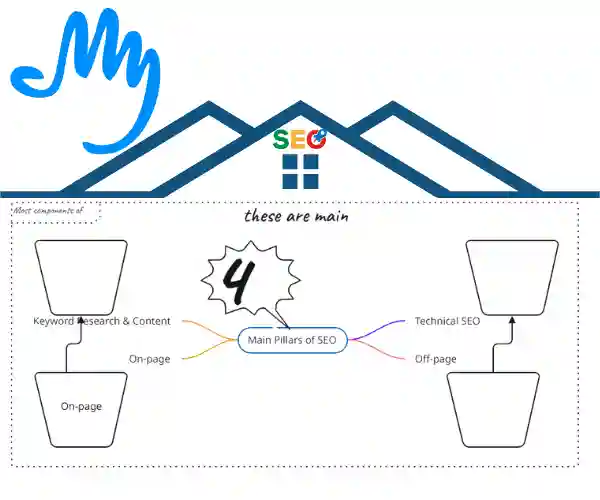
Search Engine Optimization,is not just about adding keywords to a website. It is a complete system that helps a website become visible in search engines like Google and others. To understand the pillar clearly, it is helpful to divide it into four main pillars. These SEO-pillars work together. If one pillar is weak, the whole system becomes weak. Let us understand them in a simple and clear way.
What is SEO technical for a website?
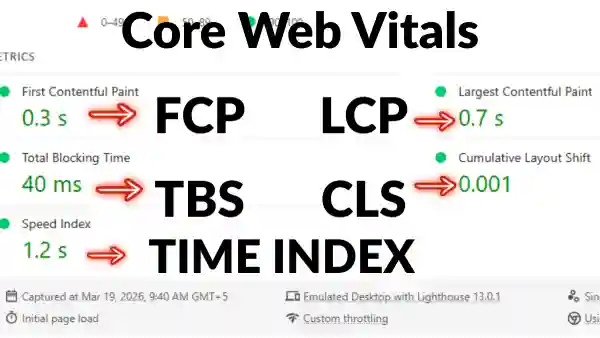
Technical part of search engine optimization is the foundation of your website. Think of it like the structure of a house. If the foundation is not strong, the house cannot stand properly. The five core web vitals are most important factors for site speed optimization, as in picture
Technical optimization makes sure that search engines can find, crawl, and understand your website. Search engines use bots to visit websites. If your website is slow, broken, or difficult to navigate, those bots may not read it correctly.
Some important parts of technical optimizing a site may include fast loading speed, mobile-friendly design, secure HTTPS connection, clean website structure, and proper indexing. A website must load quickly because users do not like to wait. It must also work well on mobile phones because many people search using their phones.
What is SEO on page or online?
This focuses on improving individual pages of your own website. Imagine each page as a book page. It must clearly explain one topic.On-page website optimization includes writing clear titles, using headings properly, adding relevant keywords naturally, writing good meta descriptions, and organizing content in a clean way. It also includes using simple URLs and adding internal links between pages.
The goal of on-page optimization is to help both users and search engines understand what the page is about. The content must answer the user’s question clearly. It should not confuse the reader. It should not repeat keywords too much. It should be natural and easy to read.Good on-page optimization makes your content more attractive and understandable.
What is SEO Content?
Content is the heart of any site. Without good content, nothing else works well.Content means the information you provide to your visitors. It can be articles, guides, blog posts, videos, or even simple explanations. The most important thing is that your content must be useful.
Before creating content, you should do keyword research. This helps you understand what people are searching for. Then you create content that answers those questions.
Good content should be clear, helpful, and updated regularly. Search engines like fresh and relevant information. If you update your content and keep it accurate, search engines will trust your website more.
Content builds authority. When people find value in your content, they stay longer on your website and may even share it with others.
What is SEO off page?
Off-page optimization happens outside your website. It is about building trust and authority. The most important part of off-page SEO is backlinks which are links from other websites to your website. When another website links to you, it is like giving a recommendation. Search engines see this as a sign of trust.But not all links are good. Links from trusted and high-quality websites are more valuable.
Off-page optimization also includes brand mentions, social sharing, and online reputation. When people talk about your website or share your content, it increases your visibility. This pillar helps search engines believe that your website is reliable and important.
Final thoughts
The four pillars of search engine optimization processes are Technical for better performance, On-Page on your own site, Content, and Off-Page on others’ site as your citation, anchor text. Together, they help your website rank higher in search engines. Technical optimization builds the base, on-page optimization improves each page, content provides value, and off-page optimization builds trust.When all four pillars work together, your website becomes strong, visible, and successful in organic search.
Search Engine Optimization has massive global scope. Millions of websites are created every year, especially in the USA, and each one needs SEO-Experts to rank and compete. In developed countries, having a website is mandatory for business growth. In Pakistan and even parts of the UAE, many businesses still lack websites or proper optimization. This gap creates huge demand and opportunity for skilled SEO-professionals like Muhammad Yaseen worldwide.
SEO FAQs
What does SEO stand for and what does it involve?
It stands for Search Engine Optimization. It involves improving a website’s content, structure, and links to increase visibility on search engines like Google, helping attract more organic (non-paid) traffic.
What is involved in Website optimization?
Website optimization involves improving a site’s speed, performance, content quality, user experience, and SEO factors. It includes fixing technical issues, enhancing design, and optimizing pages so the website loads faster, ranks better on search engines, and provides a smooth experience to users.
What role does website optimization play in improving organic search vs SEM?
When starting a business, you may need both organic search and paid visibility to gain quick exposure and traffic. Over time, by improving rankings through SEO, you can reduce ad spending and build sustainable growth. SEO delivers long-term, durable results, while paid ads provide short-term visibility but require continuous investment.
What does digital visibility mean in search rankings?
Digital visibility is the extent to which a website or brand can be seen and discovered online. In search engines, it refers to how prominently it appears in search results and LLM clickless prompts . It is achieved by optimizing content, keywords, and technical elements so it ranks higher in google SERPS, and in AI prompts so that LLM may help users and refer your presence and authoritativeness in your niche.
What does higher ranking in search engines mean?
Higher ranking in search engines means a website appears closer to the top of search results for relevant queries. It increases visibility, builds trust, and attracts more organic traffic, as users are more likely to click on top-listed pages. Google prefers first sponsored sites then SEO optimized sites rank higher in SERPs.
What does SERP stand for in digital marketing?
SERP stands for Search Engine Results Page. It is the page displayed by search engines showing relevant results, including websites, ads, and other listings, in response to a user’s search query on google, which is almost 8.5 billions and is increasing day by day and this means higher importance to optimization rather than paying google for ads. Authoritative sites appear first in visibility.
How does crawlability affect search rankings?
Crawlability affects search rankings by determining how easily search engine bots can access, scan, and understand a website’s pages. The process involves bots discovering links, crawling pages, and sending data for indexing. If a site is not easily crawlable, important pages may not be indexed, leading to lower rankings.
What factors make a webpage indexable and influence its inclusion in search results?
Indexability is important because it determines whether a webpage can be stored and shown in search results. A page becomes indexable when it is crawlable, not blocked by robots.txt or noindex tags, has quality content, proper internal linking, and a clear structure. Factors like duplicate content, poor technical setup, or errors can negatively affect indexability.
What is SEO for mobile pages, and how does it impact SERPs?
It is the process of optimizing a website to perform well on smartphones and tablets through responsive design, fast loading speed, and user-friendly navigation. It impacts SERPs by improving mobile rankings, as search engines prioritize mobile-friendly sites, leading to higher visibility, better user experience, and increased organic traffic.
What is SEO content optimization?
It involves improving website content to rank higher on search engines like Google. It includes using keywords, optimizing titles and images, and enhancing user experience. Content formats include blogs, articles, product pages, videos, infographics, guides, and FAQs to boost traffic and engagement.
What is SEO link building?
This process involves getting backlinks from other websites to your site. These links help search engines like Google understand your website’s authority and relevance. Quality backlinks improve rankings, increase organic traffic, and build credibility. It includes guest posting, outreach, and content promotion strategies.
What is SEO local search optimization?
local search ranking optimization means making your business visible to people searching within a specific area (city, region, or “near me”) on Google. It focuses on locality—optimizing your Google Business Profile, local keywords, maps listings, and reviews—so nearby customers can easily find and visit your business.
What is SEO AI?
AI visibility in search focuses on how often and how strongly your content is recognized and surfaced by AI systems on platforms like Google. Key signals include mentions, citations, share of voice, entity recognition, topical authority, inclusion in AI answers, content accuracy, engagement, trust signals, and consistent visibility across conversational search results.
What is the role of prompts in SEO content writing?
Today’s SEO trend uses prompts to guide AI in creating content. Prompts tell what to write, which keywords to use, and how to match user intent. This helps produce simple, relevant, and optimized content that ranks better on search engines and LLM platforms as well.
What is SEO optimized search intent?
Search intent in SEO is the purpose behind a user’s query—what they want to find, learn, or do. It helps content match user needs, such as informational, navigational, transactional, or commercial intent, improving rankings on search engines.
It means creating content that perfectly matches what users are looking for.
It aligns keywords, content type, and structure with user intent (informational, transactional, etc.), helping content rank higher on search engines like Google and deliver better user satisfaction.
How can page speed optimization improve SEO rankings?
Page optimization improves rankings by enhancing Core Web Vitals—LCP (loading), INP (interactivity), and CLS (visual stability). Faster pages, loading under 2-3 seconds provide better user experience, lower bounce rates, and higher engagement. These metrics are measured using tools like Google PageSpeed Insights and Google Search Console, helping websites rank higher on Google.
What is First Contentful Paint (FCP) in SEO, and what is a good score?
First Contentful Paint shows how quickly the first visible content (like text or an image) appears on a page. A good FCP is under 1.8 seconds. Example: If a user opens your blog and sees the heading or logo within 1.5 seconds, your FCP is good. You can measure it using Google PageSpeed Insights for better performance on Google.
What does Largest Contentful Paint tell us about performance?
Largest Contentful Paint (LCP) shows how quickly the main content of a page becomes fully visible to users. It reflects real loading performance and user experience. A fast LCP (under 2.5 seconds) means the page feels quick and usable, helping improve rankings on Google.
What is the difference between FCP and LCP in SEO?
FCP (First Contentful Paint) measures when first visible element appears, while LCP (Largest Contentful Paint) measures when the main content fully loads.
Example: On a blog site, if the logo or first text appears in 1.5s → that’s FCP. But when the main banner image or headline fully loads in 2.3s → that’s LCP.
👉 FCP = first glimpse
👉 LCP = main content ready
Both are important for rankings on Google.
How can we improve FCP?
You can improve First Contentful Paint (FCP) by reducing server response time, enabling browser caching, minimizing CSS/JavaScript, and using a fast hosting service. Optimizing images and using a CDN also helps content load faster.
How to reduce Largest Contentful Paint time?
Improve LCP by optimizing large images, using next-gen formats (WebP), enabling lazy loading (except the main element), reducing server response time, and using a CDN. Minimize render-blocking CSS/JS and prioritize above-the-fold content. Aim for an LCP under 2.5 seconds to improve performance on Google.
What is CLS in core vitals?
Cumulative Layout Shift (CLS) measures how much a page’s layout unexpectedly moves while loading. A high CLS causes poor user experience, like buttons shifting while clicking. A good CLS score is below 0.1, helping improve stability and rankings on Google.
How to improve CLS for better performance?
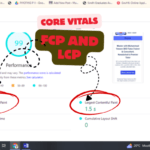
Improve CLS by setting size attributes for images and videos, reserving space for ads, avoiding dynamic content shifts, and using stable fonts. Reducing layout movement ensures a smoother experience and better search performance as in picture of site seotutor.org. Tutor Muhammad Yaseen applies best practices for writting SEO optimized content.
What is Bing Webmaster Tools and how does it help in search rankings?
Bing Webmaster Tools is a free platform that helps website owners monitor indexing, submit sitemaps, fix SEO issues, and improve visibility on both Bing and Yahoo search engines.
How do search engines like Bing and Yahoo index websites?
Search engines use automated crawlers to discover, analyze, and store web pages in their index. Submitting your site to Bing Webmaster Tools and providing a sitemap helps speed up indexing on both Bing and Yahoo
What are the main types of SEO?
The main types include on-page SEO, off-page SEO, and technical SEO. Each plays a role in improving website performance and rankings.
What is a meta title and meta description?
A meta title is the clickable headline in search results, while a meta description provides a brief summary of the page content, this is shown before landing on your page.
How long should a meta title and description be?
A meta title should be around 55–60 characters, and a meta description should be around 155–160 characters with primary keyword inside it.
How can I get my website indexed faster?
You can speed up indexing by submitting your sitemap, using webmaster tools, in Google search console or Bing Webmaster for both for yahoo and Bing altogether.
What is a XZM sitemap?
A sitemap is an XML file that lists all important pages of your website to help search engines crawl and index them efficiently. You have to resubmit if any changes in your content is being made.
How long does website optimization take to show results?
This usually takes 3 to 6 months to show noticeable results, depending on competition and strategy.